

Smoothies for Weight Loss: How to Build One That Actually Works

Smoothies for Weight Loss: How to Build One That Actually Works
Smoothies occupy a strange spot in the weight loss conversation. On one hand, they’re often positioned as a quick, healthy way to manage weight. On the other, many popular smoothie recipes are little more than a milkshake in disguise, packed with enough sugar and calories to work against the very goal they’re marketed toward.
The difference between a smoothie that supports weight loss and one that quietly sabotages it comes down almost entirely to how it’s built. Understanding the underlying principles makes it possible to enjoy smoothies regularly while still supporting a calorie-conscious, nutritionally balanced approach to weight management.
Why Smoothies Can Go Wrong for Weight Loss
Many store-bought and even homemade smoothies are calorie bombs hiding behind a healthy reputation. A large smoothie loaded with multiple servings of fruit, fruit juice as a base, honey, and toppings like granola can easily exceed 500 to 700 calories, often without providing much sustained fullness relative to that calorie load.
The core issue is usually an imbalance: too much sugar from fruit and sweeteners, too little protein and fiber, and liquid calories that don’t trigger the same fullness signals as solid food. This combination can leave you consuming a significant number of calories while still feeling hungry shortly afterward.
The Core Principles of a Weight-Loss-Friendly Smoothie
Building a smoothie that actually supports weight loss goals comes down to a few consistent principles, regardless of specific ingredients or flavor preferences.
Prioritize Protein
Protein is the single most important addition for a weight-loss-supportive smoothie. It significantly increases satiety compared to carbohydrates or fat alone, helping you feel satisfied for longer and reducing the likelihood of snacking shortly after.
Aiming for roughly 20 to 30 grams of protein per smoothie, from sources like protein powder, Greek yogurt, cottage cheese, or silken tofu, makes a substantial difference in how filling the final result is.
Control Fruit Portions
Fruit isn’t the enemy, but it’s easy to overdo it in smoothies, where multiple servings blend seamlessly into a single drink without the natural portion control of eating whole fruit. Limiting fruit to roughly one cup, and choosing lower-sugar options like berries over higher-sugar options like mango or pineapple, helps keep calories and sugar content in check.
Add Fiber Beyond Fruit
Fiber slows digestion, supports fullness, and helps stabilize blood sugar levels. Chia seeds, flaxseeds, and leafy greens add meaningful fiber without significantly increasing calorie content, making them valuable additions to a weight-loss-focused smoothie.
Include a Modest Amount of Healthy Fat
A small amount of fat, from a tablespoon of nut butter, a few slices of avocado, or a tablespoon of chia or flax seeds, supports satiety and helps the body absorb fat-soluble nutrients. The key word is modest, since fat is calorie-dense and easy to overdo in a blended drink.
Choose a Low-Calorie Liquid Base
Fruit juice as a smoothie base adds significant sugar and calories without contributing meaningfully to fullness. Water, unsweetened almond milk, or unsweetened coconut water are far better choices for keeping the overall calorie count reasonable.
Skip the Added Sweeteners
Honey, maple syrup, and flavored yogurts all add calories and sugar without adding nutritional value. If a smoothie needs added sweetness beyond what the fruit provides, that’s often a sign the recipe is already leaning too far toward a dessert-like profile rather than a balanced meal or snack.
A Sample Weight-Loss-Friendly Smoothie
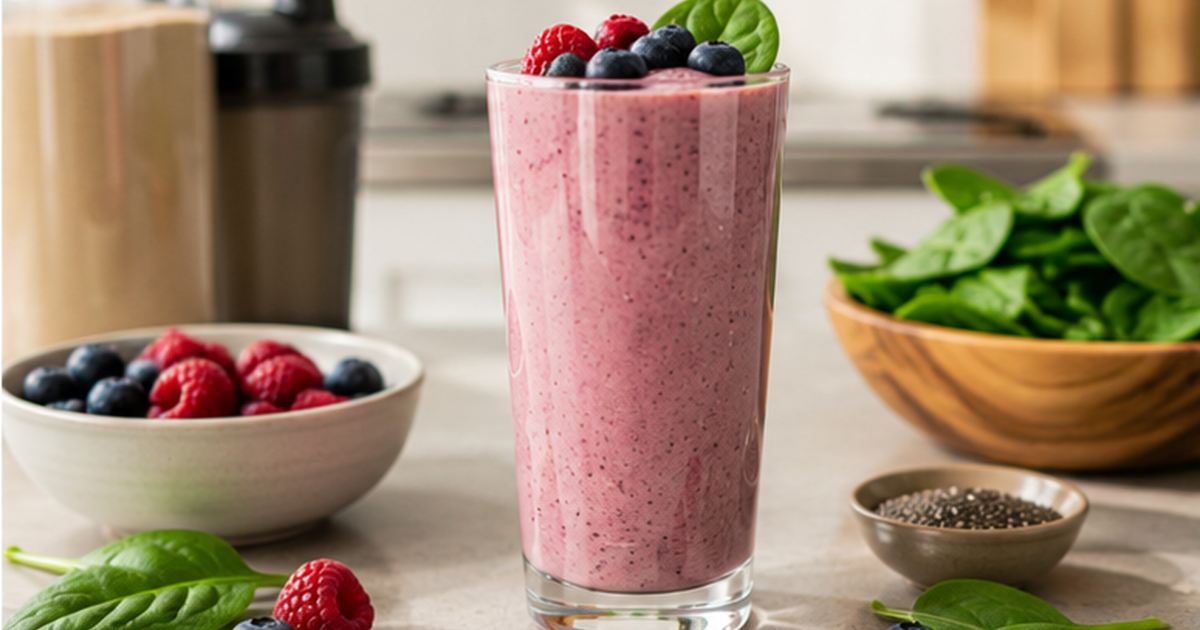
A well-balanced example might include:
- A scoop of protein powder (or half a cup of Greek yogurt)
- A cup of unsweetened almond milk
- A handful of spinach
- Half a cup of frozen berries
- A tablespoon of chia seeds
- Ice as needed for texture
This combination balances protein, fiber, and controlled natural sugars, generally landing in the 250 to 350 calorie range while offering substantial fullness, a significant improvement over many popular smoothie recipes that pack similar or higher calories with far less staying power.
Smoothies as a Meal vs. a Snack
One common mistake is treating a smoothie sized like a snack as a full meal replacement, or vice versa. Being clear about the smoothie’s role in your day helps with portion and ingredient decisions.
As a meal replacement, a smoothie should include adequate protein (25 to 30+ grams), some healthy fat, and enough total volume and fiber to feel satisfying for several hours, generally landing in the 350 to 500 calorie range depending on individual needs.
As a snack, a smaller smoothie with lighter protein content (10 to 15 grams) and a smaller overall volume, generally in the 150 to 250 calorie range, fits better between meals without displacing the calories your body needs from other meals.
Confusing the two often leads to either being hungry shortly after a meal-sized smoothie that was actually built like a snack, or unintentionally overeating when a snack-sized smoothie is treated as a full meal.
Timing Considerations for Weight Loss
While total daily calorie balance matters more than precise timing for weight loss, a few practical considerations can help smoothies fit more effectively into a weight-conscious routine.
Morning smoothies can help control appetite throughout the day when built with adequate protein, though they shouldn’t fully replace the benefits of whole-food breakfasts for everyone, since some people find liquid meals less satisfying than solid food.
Post-workout smoothies can support recovery when they include both protein and some carbohydrates, though the calorie content should still be accounted for within overall daily intake goals.
Evening smoothies work fine for weight loss goals as long as portion and ingredient choices remain consistent with the rest of the day’s eating pattern, though some people find liquid meals less satisfying late in the day when hunger cues are different.
Common Mistakes That Undermine Weight Loss Goals
Treating smoothies as inherently “healthy” regardless of ingredients. A smoothie loaded with juice, honey, and multiple servings of high-sugar fruit can easily contain more sugar and calories than a candy bar, despite the health-conscious framing.
Adding too many “boost” ingredients. Nut butters, granola, honey, and multiple superfood powders can each seem like a small addition, but they add up quickly in calories, often pushing an otherwise reasonable smoothie well beyond a weight-loss-supportive calorie range.
Skipping protein entirely. A fruit-and-liquid-only smoothie lacks the staying power needed to prevent hunger shortly afterward, often leading to snacking that offsets any calorie savings.
Not accounting for smoothie calories in daily totals. Because smoothies are consumed quickly and don’t always feel like a “full” meal, it’s easy to underestimate their calorie contribution, which can quietly undermine weight loss efforts over time.
Relying too heavily on smoothies without whole foods. Smoothies can be a valuable part of a weight loss approach, but a diet built almost entirely around blended meals often lacks the variety and chewing satisfaction that support long-term adherence for many people.
The Bottom Line
Smoothies can absolutely support weight loss goals, but only when built with intention. Prioritizing protein, controlling fruit and liquid portions, adding fiber, and skipping unnecessary sweeteners transforms a smoothie from a hidden calorie trap into a genuinely useful tool for managing hunger and supporting a calorie-conscious eating pattern.
The goal isn’t to avoid smoothies in the name of weight loss, but to build them the same way you’d build any other balanced meal or snack: with attention to protein, fiber, portion size, and overall nutritional balance, rather than relying on the assumption that anything blended with fruit and greens is automatically diet-friendly.
